Immersive Combat in Deep Space
Cyber Siege started from a direct challenge: build a fully playable VR shooter from scratch in two weeks, solo — no team, no existing codebase, just Unity and a Meta Quest.
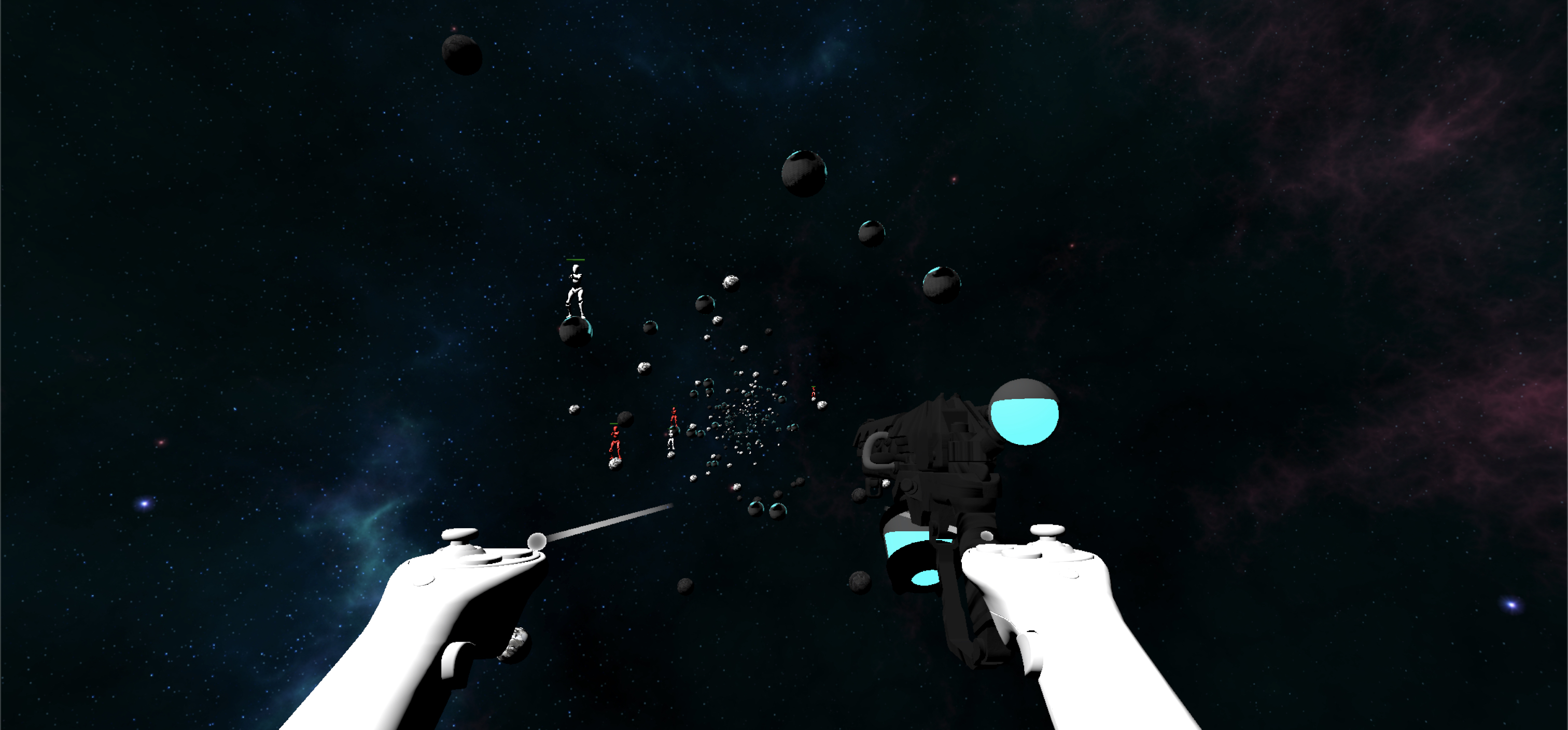
The design goal was to create a sense of constant forward pressure — players are propelled through a hostile asteroid field with threats emerging from all angles, demanding full spatial awareness and fast reflexes inside a truly immersive VR environment.
How I Built It
Concept & Scope
Defined the core loop early — tunnel movement, shooting, enemy waves, scoring — to keep the solo two-week build focused and achievable.
XR Foundation
Set up OpenXR and XR Interaction Toolkit first, establishing player movement, hand tracking, and controller input before any gameplay systems.
Systems Build
Built shooting, enemy AI, health, scoring, and the procedural asteroid tunnel iteratively — testing on hardware at each stage.
Quest Optimization
Profiled and tuned shaders, lighting, and spawn density to hit a stable frame rate on standalone Quest hardware before final build.
Core Mechanics
XR Movement
Ship syncs with XR Origin — the headset and controllers directly drive navigation through the asteroid tunnel.
Shooting System
Physics-based projectiles with per-bullet hit flags — no double-registrations, clean collisions every time.
Enemy AI
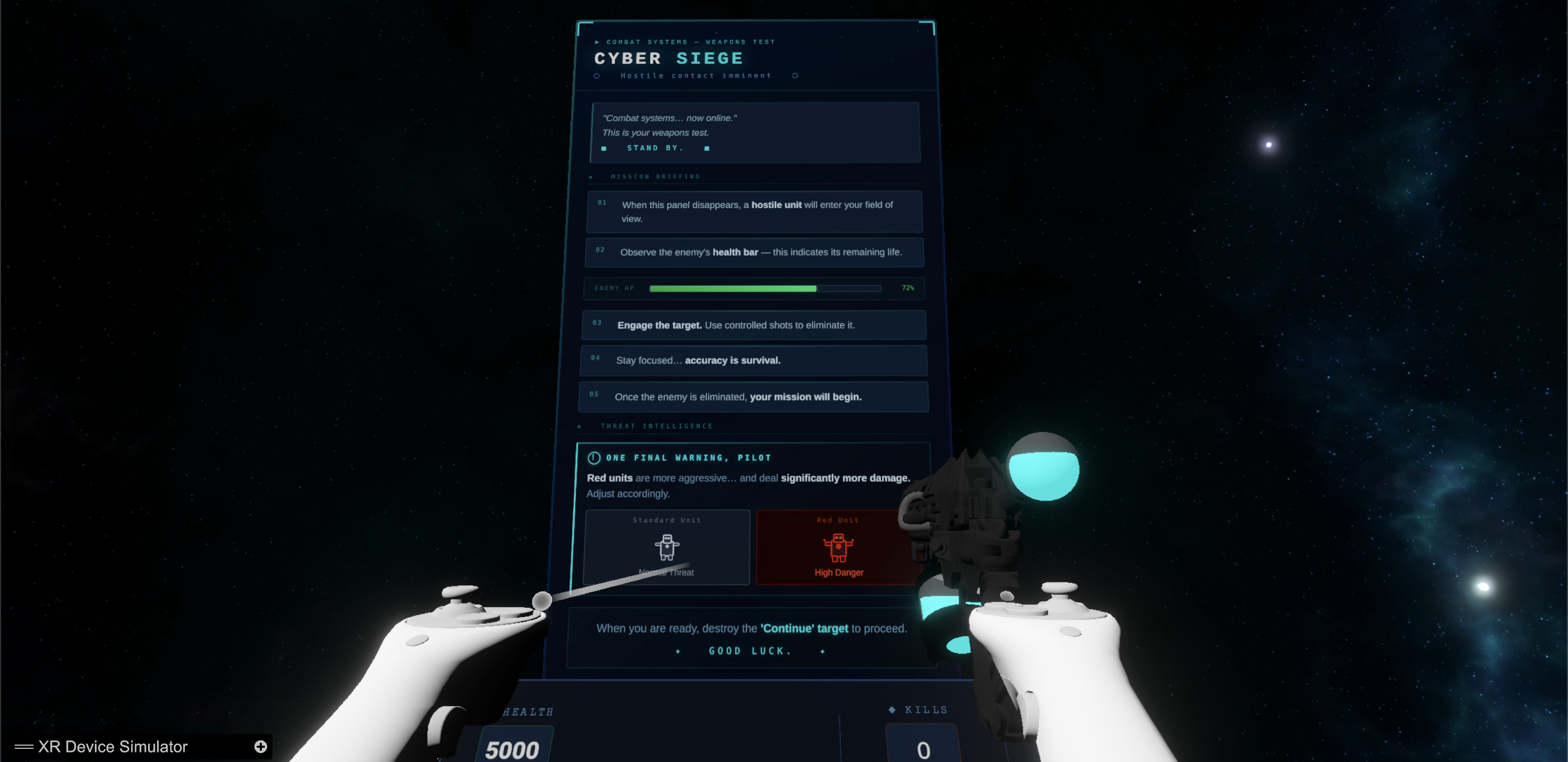
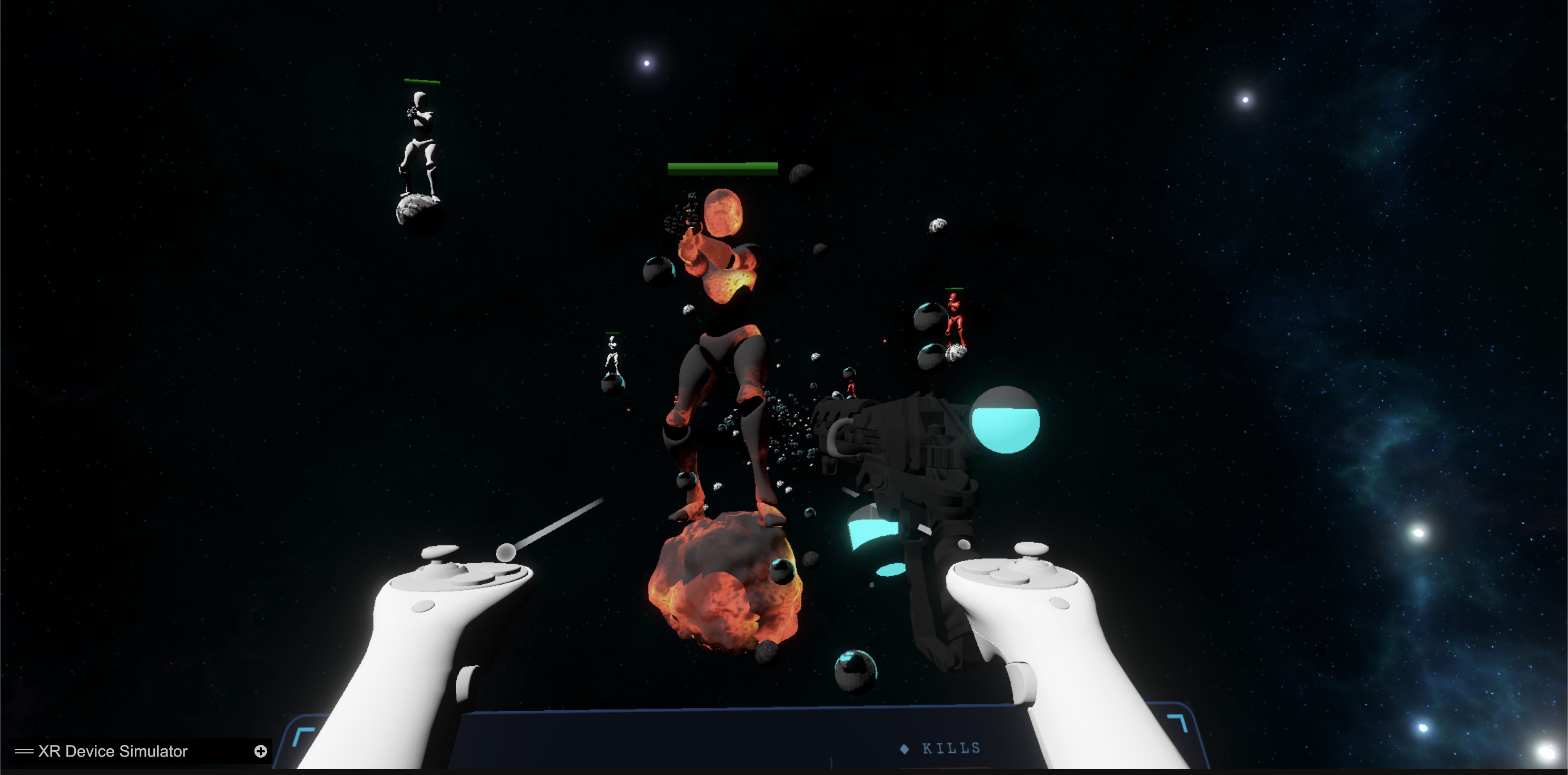
Two enemy types — standard white units and elite red androids — spawning dynamically ahead of the player.
Difficulty Scaling
Speed, spawn rate, and damage all increase over time — no dead zones or lull periods at higher depths.
Asteroid Tunnel
Procedurally generated tunnel with static and moving asteroids plus a hyperspace effect attached to the player.
HUD & Game Flow
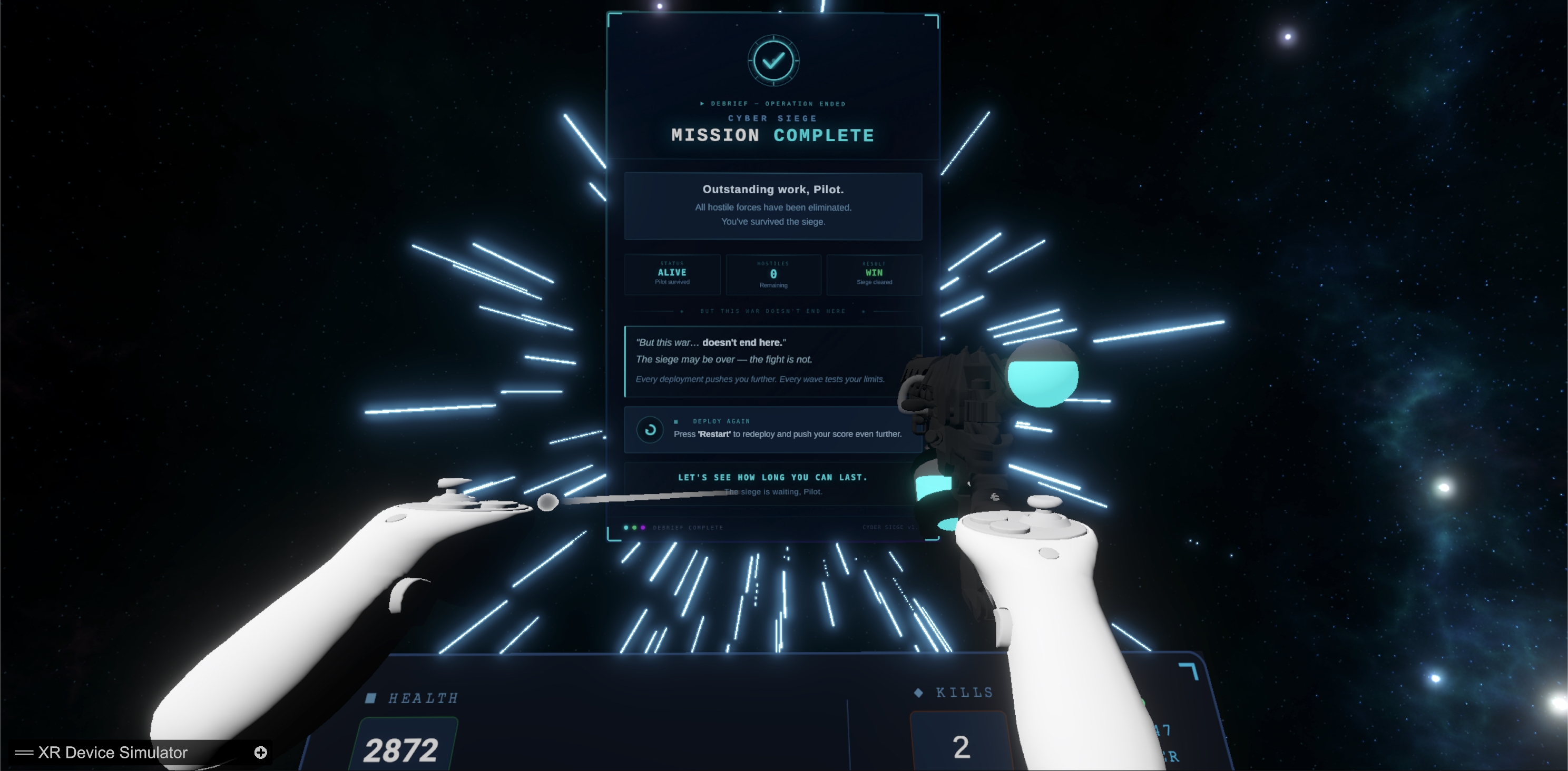
Real-time health, score, and kill count — plus full win/lose panels with restart for complete replayability.
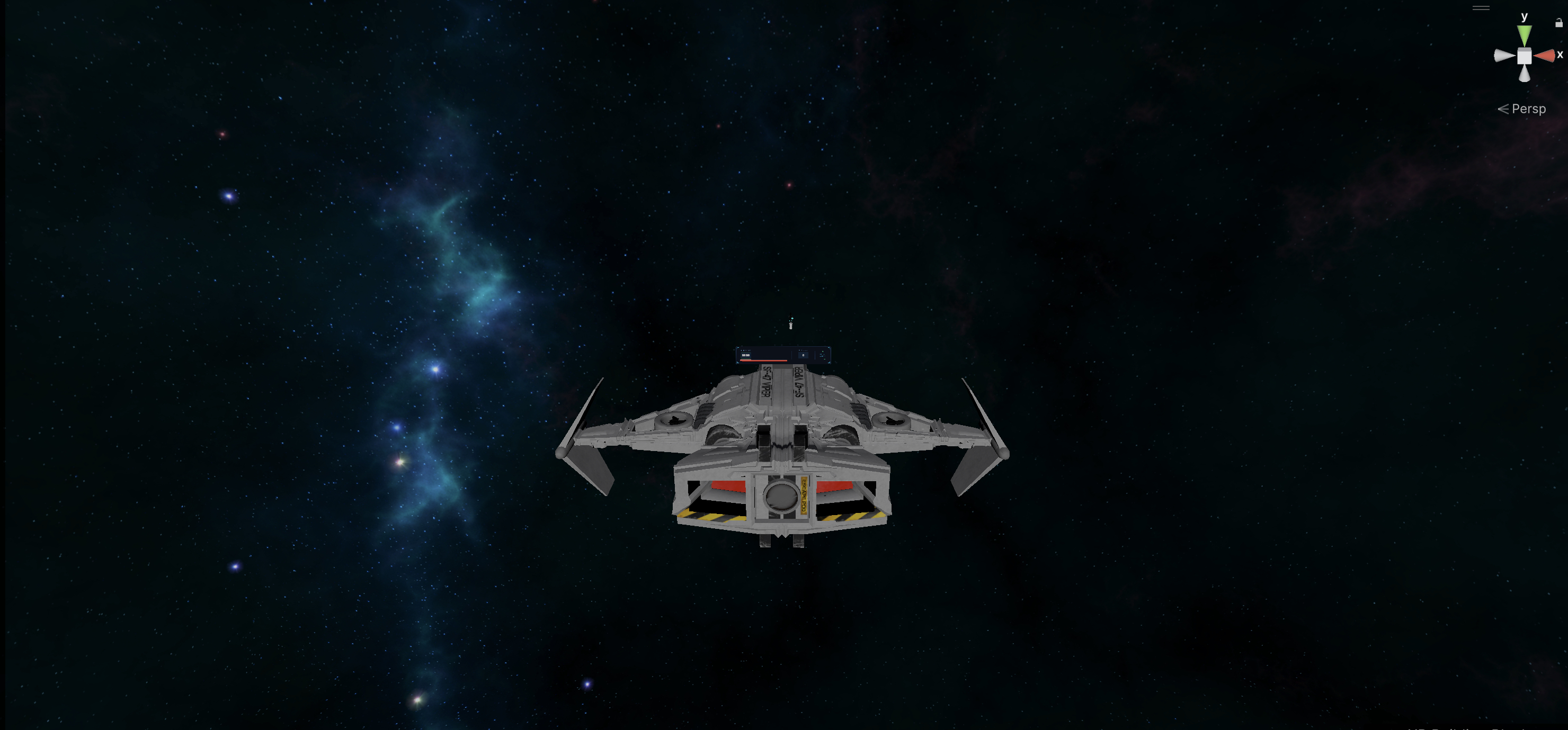
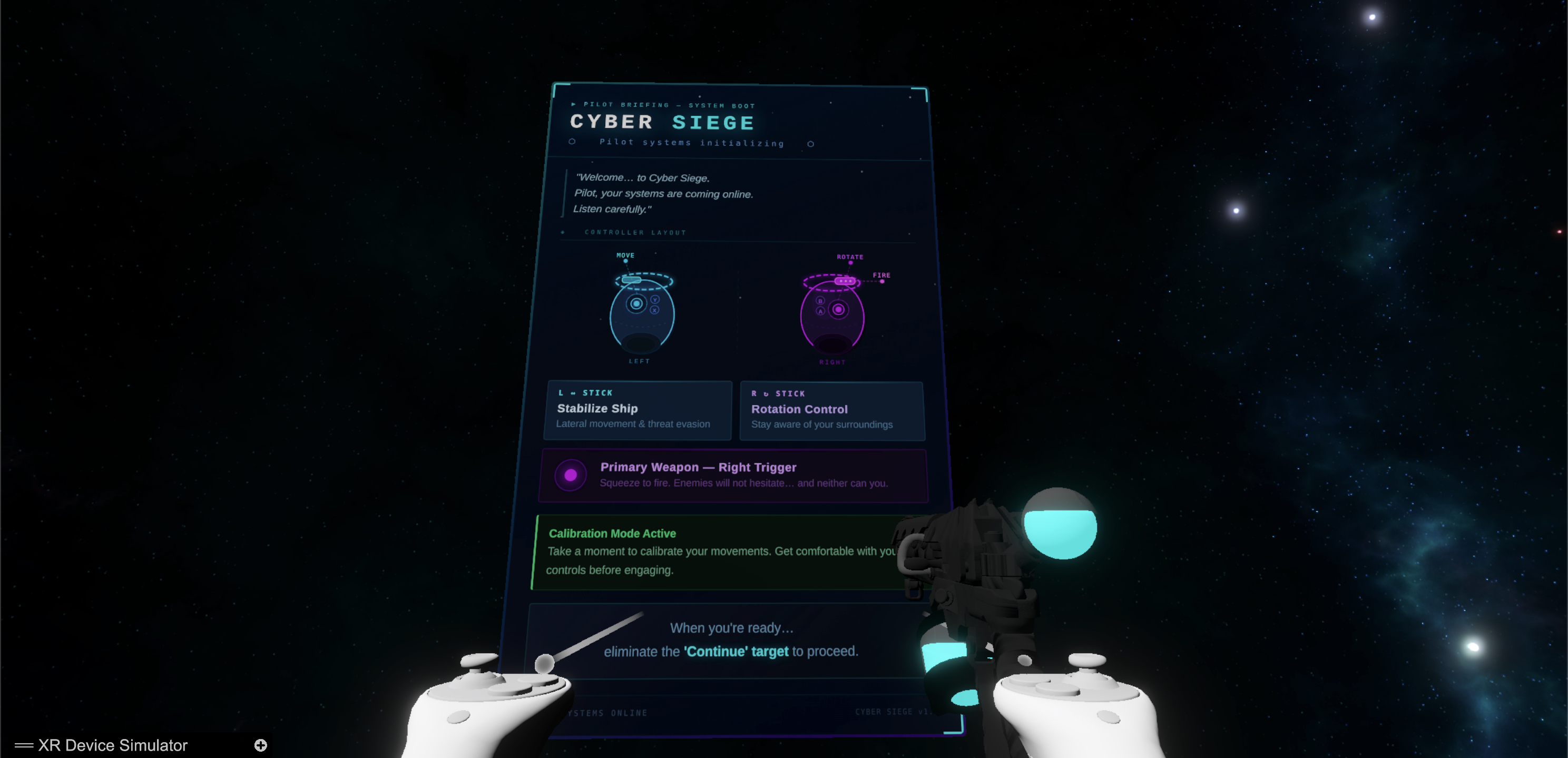
See It In Action
Game Gallery
What I Built
Access the Project
Cyber Siege — GitHub Repository
Full Unity project source — C# scripts, XR configuration, enemy systems, procedural generation, and all gameplay systems. Browse, fork, or download the APK to sideload on Meta Quest.
What I Overcame
XR Origin vs Ship Movement
Player movement conflicted with XR Origin, disconnecting the headset view from the ship's position mid-flight.
Hybrid Follow System
Implemented a sync system that couples ship position to XR Origin while maintaining smooth control continuity throughout.
Projectile Hit Detection
Bullets would pass through targets or trigger multiple collision events on the same enemy, breaking combat reliability.
Per-Bullet Hit Flags
Added single-hit flags per projectile and reworked the collision hierarchy using GetComponentInParent() for clean one-hit registration.
Quest Performance
High object counts — asteroids, enemies, and particle effects — caused frame rate drops on the standalone Quest hardware.
URP Optimization
Tuned URP shaders and lighting, limited spawn density, and disabled expensive effects like SSAO to hit a stable frame rate.
Enemy Spawning & Pacing
Enemies appeared behind the player and dead zones with zero enemy presence kept breaking tension and immersion.
Positional Spawn Logic
Refined spawn logic so enemies always appear ahead of or alongside the player with no lull periods at any depth.
What I Delivered
In two weeks as a solo developer, Cyber Siege went from concept to a fully playable, APK-deployed VR shooter on Meta Quest. Every system — movement, shooting, AI, procedural generation, scoring, and UI — was designed, built, and optimized by hand.
Where It Could Go
Try It Yourself
Sideload the APK onto any Meta Quest device and experience the tunnel firsthand.